Comrades Marathon Addresses Questions About the Substitution Process
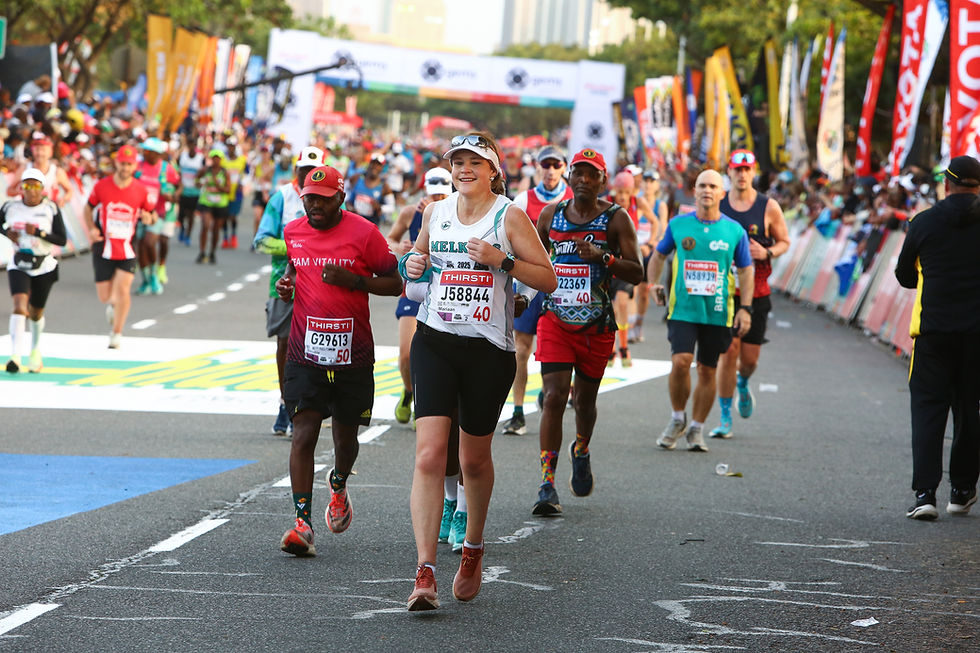
Following the closure of the substitution ballot entry period, the Comrades Marathon Association (CMA) would like to outline how the process worked, and point out that an unprecedented effort was made to give every applying runner a chance of securing an entry for the 99th edition of the race, taking place on 14 June.
The substitution process consisted of two key phases. The withdrawal window ran from 16 March to 30 March, and in that time, a total of 2,444 entries were made available by withdrawing runners, who had already entered the event, but who no longer wanted to participate, or were no longer able to participate. All 2,444 withdrawn entries were placed into the substitution entry ballot process.
At roughly the same time, the substitution application window was open from 12 March to 2 April, and in that time, a total of 4,832 substitution applications were received. These were mostly runners who had not been successful in securing an entry in November when the full quota of 22,000 entries sold out in just one day – a first in the history of the race. This unprecedented demand prompted the CMA to introduce a new substitution policy.
“In previous years, substitutions operated on a first-come, first-served basis, meaning a runner’s chance of securing an entry depended largely on being the quickest to log in. This system was not fair, as many runners have limited or inconsistent access to the Comrades Marathon website or app, and payment processing difficulties also placed some runners at a disadvantage,” says Comrades Marathon Race Director, Sue Forge.
“This year, we introduced a ballot system in which all available entries were placed into a draw, giving applicants an opportunity to secure one of the available entries. We also issued multiple calls encouraging withdrawing runners to release their entries due to the high demand. Unfortunately, with 4,832 applicants competing for 2,444 entries, some runners were inevitably left disappointed.”
Every Effort Made to Assist Runners
Forge goes on to assure any disappointed runners that the CMA went to extraordinary lengths to make sure that all available entries were allocated to runners wanting to still secure their place on the start line of the 2026 race. She explains that the process worked as follows:
Once the substitution application window closed on Thursday, 2 April, the ballot draw was conducted using the total number of available entries.
Successful applicants were notified via email and informed that their entry fees would be automatically debited on Wednesday, 8 April, unless they opted to decline their ballot entry if they no longer wished to participate.
On Thursday, 9 April, a second automatic debit attempt was processed for those whose payments were unsuccessful during the first attempt.
Entries linked to unsuccessful payment attempts after both debit cycles were forfeited and returned to the ballot pool.
This process was repeated two additional times, as there were individuals who declined their substitution entry, as well as a number of unsuccessful debit payments.
Following the above processes, all withdrawing runners were notified that their entry had been successfully substituted and that their refund would follow.
“Our Entries Office went the extra mile throughout these processes. In addition to conducting three rounds of ballot draws and payment processing, staff personally contacted runners who had not responded to emails or whose payments had failed. Our goal was to ensure that all available entries were allocated, and that every runner seeking an entry had a fair opportunity of getting into the 2026 race” says Forge.
“We acknowledge that some runners remain very disappointed after missing out, and we sincerely hope they will try again in 2027, when we celebrate the Centenary edition of this incredible race. Importantly, all runners wishing to be part of the 100th edition next year will once again have a fair chance of securing an entry – participation in the 2026 race will not influence eligibility or selection in the 2027 process.”
Forge closes with the following message to the running community: “The entry process is now officially closed, and the CMA will not be undertaking any further entry processes or ballot draws after the 4 May deadline for the submission of qualifying results and profile updates. This is necessary to meet critical operational, logistical, and administrative timelines for the race, to ensure everything is ready for race week. While we would have liked to accommodate even more runners on the start line in June, we must now bring this process to a close. Finally, I would like to thank all runners for their passion, enthusiasm, and ongoing support of the Comrades Marathon. Your commitment to the race continues to inspire us and remains at the heart of everything we do.”
Deadline to Submit Qualifiers and Profile Updates
The CMA reminds all 2026 entrants of the 4 May deadline for finalising their entries and confirming their participation in this year’s race. “In order to qualify to start the race, runners need to adhere to all the qualifying criteria, which includes submitting their qualifying information, completing the compulsory medical questionnaire, and updating their entrant profile by no later than 4 May 2026,” says Forge.
“Qualifying details and medical questionnaires will not be accepted under any circumstances after that date, and incomplete entries will be rejected, so we urge runners to complete the entry process via their online entry profile on the Comrades Marathon website or app. It is the runner’s responsibility to check their details and entry confirmation before 4 May 2026, and runners should request their club administrator or secretary to assist if they are unable to do so themselves.”


Comments